
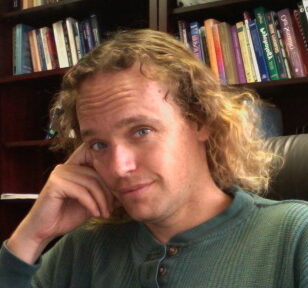
Dr. Chris Eliasmith: Exploring a simulated brain: from human behaviour to drug effects | Étudier le cerveau virtuel : du comportement humain aux effets des médicaments

Chris Eliasmith, University of Waterloo Jeudi, le 14 avril 2016 Large-scale brain models have become the centerpiece of many international "big science" projects. At the University of Waterloo, Chris Eliasmith and his team have created 'Spaun', the world's most comprehensive, functional brain model. The first to demonstrate realistic behaviours under biological constraints, Spaun can reproduce […]
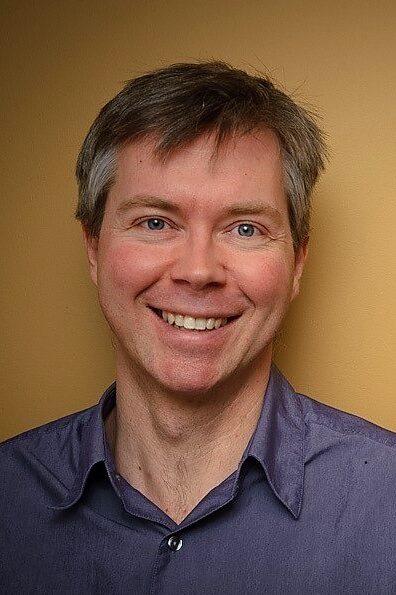
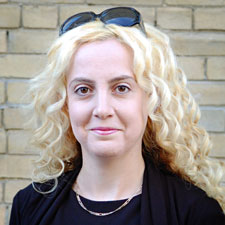
Dr. Jean Caron: Keeping food available and affordable : a twenty-first century challenge | Des aliments disponibles et abordables : un défi du 21e siècle

Jean Caron, Université Laval Thursday May 12, 2016 Agriculture today faces increasing challenges ranging from extreme weather and soil and water depletion to the relentless conversion of food land to other uses. Professor Jean Caron of Université Laval is a leader in soil science and precision agriculture technologies. From his own research, he will present […]

Kenneth Lee: Crude oil on water – an expert perspective on spills, their impacts and remediation | Les effets du pétrole brut sur l’eau – Le point de vue d’un expert sur les déversements, leurs répercussions et les mesures d’assainissement

Kenneth Lee, Commonwealth Scientific and Industrial Research Organisation (CSIRO) Thursday June 9, 2016 Even with a concerted global effort to replace carbon fuels with other energy sources, oil continues to be used widely around the world and will be transported by pipeline, rail, tanker trucks and ship for decades to come. Despite advances in technologies […]

Dr. Mike Flannigan: Living with Forest Fires: Lessons from Fort McMurray | Vivre avec les feux de forêt : leçons tirées des feux de Fort McMurray

Mike Flannigan, University of Alberta Thursday September 29, 2016 Every year, for millennia, thousands of small fires and dozens of large ones break out in Canada’s boreal forest. This will continue as long as people work, build, live, and play in the boreal forest. Disaster can strike when fires occur near populated areas. Last spring's […]

Dr. Jeremy Kerr: The great biodiversity challenge: conserving nature through a century of unprecedented change | Le grand défi de la biodiversité : la conservation de la nature pendant un siècle marqué par des changements sans précédent

Jeremy Kerr, University of Ottawa Thursday October 27, 2016   Jeremy Kerr, Université d'Ottawa Jeudi, le 27 octobre 2016 Nous comptons sur la nature pour une foule de services essentiels pour assurer notamment le maintien de l’approvisionnement alimentaire et de la fertilité du sol ou tout simplement pour profiter de quelques moments de détente dans […]

Sylvain Martel: Canadian nanorobots: an option for fighting cancer? | Les nanorobots canadiens : une option pour combattre le cancer?

Sylvain Martel, Polytechnique Montréal Thursday December 1, 2016   Sylvain Martel, Polytechnique Montréal Jeudi le 1er décembre 2016 L’intégration des nanotechnologies à la robotique connait une progression rapide, si bien que des nanorobots tout droit sortis de la science-fiction ouvrent des possibilités extraordinaires en médecine et en pharmaceutique. Ainsi, des armées constituées de centaines de […]

Dr. Gail Atkinson: Unnatural tremors: the science of fracking and earthquakes | Tremblements anormaux : Le science de la fracturation hydraulique et des tremblements de terre

Gail Atkinson, Western University Jeudi, le 9 février 2017   Gail Atkinson, Western University Thursday February 9, 2017 La fracturation hydraulique a transformé l’économie des ressources en combustibles fossiles en Amérique du Nord et donné un nouvel essor à l’industrie pétrolière et gazière. Cependant, les tremblements de terre qui se produisent près des sites de […]

Dr. Goldie Nejat: Can I Help You? The Future of Socially Assistive Robots in Healthcare | Puis-je vous aider? L’avenir des robots d’assistance intelligents dans le domaine des soins de santé

Goldie Nejat, University of Toronto Thursday March 9, 2017   Goldie Nejat, University of Toronto Jeudi, le 9 mars 2017 En raison de son faible taux de croissance et de sa population vieillissante, le Canada aura bientôt besoin des robots intelligents pour répondre à la demande croissante en soins de santé. Notre laboratoire développe des […]

Robert Hofstede: Building a climate-smart world: How development research helps the global population adapt to climate change | Bâtir un monde climato-intelligent : aider la population mondiale à s\adapter aux changements climatiques grâce à la recherche en développement

Robert Hofstede, International Development Research Centre Thursday, April 6, 2017 Robert Hofstede, Le Centre de recherches pour le développement international Jeudi le 6 avril 2017 La présentation portera sur certains des résultats qui se dégagent des investissements du Canada dans la recherche sur le développement à l’échelle internationale axée sur le climat et sur la […]

Dr. Leon Kochian: Next-generation technologies for tomorrow’s crops: Getting to the roots of global food security | Technologies de la prochaine génération pour les cultures de demain : aller à la source de la sécurité alimentarie mondiale

Leon Kochian, University of Saskatchewan Thursday, May 4, 2017 With stagnating food production and a world population expected to reach almost 10 billion by 2050, global food security is a top-of-mind challenge for everyone. Dr. Kochian’s lab focuses on the plant’s “hidden half” -- the roots, until now largely ignored by breeders. For the very […]

Dr. Yoshua Bengio: Deep Learning and Artificial Intelligence: Is Canada ready for the challenge? | Apprentissage profond et intelligence artificielle : Le Canada est-il prêt à relever le défi?

Dr. Yoshua Bengio, Université de Montréal Thursday September 28, 2017 Machine learning, and more specifically deep learning, will generate immense wealth and transform economies over the coming decade. Yoshua Bengio will discuss Canada's leadership in the stunning scientific revolution that is bringing machines ever closer to human- level intelligence, and the serious questions these technologies […]

Dr. Jay T. Cullen: Uncharted Waters: A scientific glimpse into the future of the Arctic Ocean | Naviguer dans des eaux inexplorées : Regard scientifique sur l’avenir de l’océan Arctique

Dr. Jay T. Cullen, University of Victoria Thursday October 26, 2017 Climate change is reshaping the Arctic Ocean faster than anyone imagined. Warming is reducing sea ice cover in the summer months, adding freshwater from melting of sea ice and glaciers, and altering ocean currents and ocean mixing. While Northerners may benefit from the expansion […]